Showing posts with label Peter Gumpel. Show all posts

Sunday, December 26, 2010

Pius XII and Wikileaks - The Guardian article

This is the article that appeared in the UK newspaper, The Guardian on Tuesday 21 December 2010.  It is, in effect, a summary of the four cables related to Pius XII, the archives and current moves to access the war-time material.  Journalist Andrew Brown poses an interesting question at the end.  Is the current round of disappointments symptomatic of a deeper lack of energy in the Vatican over resolving, or attempting to resolve, the historical analysis of Pius XII? Is it part of a deeper Catholic "culture war" between those who believe the Church should engage with the world in which we all live, prepared to acknowledge mistakes and errors as well as the good the Church brings, and those who believe Catholic identity has been compromised and needs clear, unequivocal one-voiced leadership? 

From my perspective, the questions are interesting, but beyond what I am prepared to spend time on in this blog. 

WikiLeaks cables: Vatican vetoed Holocaust memorial over Pius XII row


Moves to beatify controversial wartime pope reveal tension between conservatives and liberals in Catholic church


Andrew Brown


Pius XII has long been a controversial figure for his failure publicly to denounce the Holocaust in 1941 or 1942.
The Vatican has withdrawn from a written agreement to join an international Holocaust memorial organisation because of tensions over the activity of Pope Pius XII, the pope during the second world war, American diplomatic cables show.


Relations have become so frosty that the Vatican "rowed back on a prior written agreement" to take up observer status on an international organisation dedicated to remembering the Holocaust and transmitting its lessons to the future, according to Julieta Valls Noyes, the number two at the American embassy to the Holy See.

Julieta Valls Noyes, deputy chief of mission, US Embassy to the Holy See (August 2008 -)


In October 2009, she reported that the plans for the Vatican to take up observer status at the Task Force for International Cooperation on Holocaust Education, Remembrance, and Research "had fallen apart completely … due to Vatican back-pedalling".


She was unclear whether this was attributable to the newly-appointed deputy foreign minister of the Vatican, Mgr Ettore Balestrero, whom she described as "relatively inexperienced", adding that "this would not be the first time he has complicated Vatican foreign relations".


But she thought it might also indicate that the Vatican "may ... be pulling back due to concerns about ITF pressure to declassify records from the WWII-era pontificate of Pope Pius XII".


Pius XII has long been a controversial figure for his failure publicly to denounce the Holocaust in 1941 or 1942, when the Vatican was first informed of what was going on.


Before becoming pope, he had served as the Vatican ambassador in Berlin. Some Jewish groups have accused him of anti-semitic attitudes; his defenders, among them many other Jews, have argued that any more overt resistance to the Nazis would have been counter-productive, citing the example of the church in the Netherlands, where savage repression and the deportation of many more Jews followed a denunciation of Nazi policies from the pulpit.


Both sides believe they will be proved right by papers in the Vatican archives, but their release has been extremely slow. The American diplomatic cables show a long and increasingly futile effort on behalf of the embassy to mediate between the Vatican archivists and outside historians, bedevilled by mutual mistrust.


The story starts in 2001, when the first attempt to negotiate a solution had already broken down. Father Peter Gumpel, a German Jesuit priest and admirer of Pius XII, who was keeper of the archives, threatened to sue a journalist who suggested that he or his family had been Nazis, the cables show.


"Gumpel also expressed concern about references in the media and in other comments to him as the 'German Jesuit'. Gumpel [said] his family had been victims of Nazi persecution and several had been killed by the Nazis.


He himself had to flee Nazi Germany as a refugee, first to France and then later to Holland. He recalled that at one point a reporter had planned to print an assertion that Gumpel was a Nazi himself – something Gumpel said was libellous, and which he was more than willing to go to court to fight."


The next year, Cardinal Walter Kasper, another German, attempted to restart the dialogue over the papers. The-then American ambassador, Jim Nicholson, reported a conversation with him on December 18 2001. "[Kasper] said that Father Gumpel was the Vatican's best informed living expert on the papacy of Pius XII."


Two months later, partly responding to American pressure, Pope John Paul II, who also wanted his predecessor canonised, authorised the early release of documents relating to Pius XII's earlier career as the Vatican's ambassador to Germany.


Nicholson reported: "The decision … appears to be an attempt by the pope to silence accusations of anti-semitism levelled against his predecessor Pius XII. It may also herald renewed Vatican interest in beatifying Pius XII – free from the pall of scandal and derision.


The decision by Pope John Paul II to dispense with standard operating procedures in this case comes after years of Vatican protestations that this material could not be released because it was not yet properly catalogued. The decision shows that whatever the pope wants, does in fact happen."


But this would not be true for very much longer. As John Paul II sank into the Parkinsonian condition that would eventually kill him in 2005, the Vatican drifted. There is reference to the shortage of researchers, and by the time the subject resurfaces in 2009 all hope of compromise seems gone.


Noyes reported that only six or eight researchers were working on the 16m documents, stored in hundreds of crates, that are left over from Pius XII's papacy. It had earlier taken a team of four Jesuits, working full time, 17 years to produce 12 volumes of his diplomatic correspondence.


One well-informed Jewish observer remarked that the desire to canonise Pius XII stems almost entirely from internal Catholic dynamics.


What really mattered in the struggle between liberals and conservatives was the interpretation of the reforming Second Vatican Council, called by his successor, John XXIII.


Was this a break with the past, as liberals believe, or merely a development, as conservatives see it?


So long as John XXIII is on the road to sainthood, and Pius is blocked, it is harder to maintain that the two men pursued that same policy.


In this context, the Holocaust is not the most important fact about Pius's pontificate, as for Jews it must be. This kind of disagreement could not be solved even if the archives were entirely open, and all the facts were known, and agreed.


Pius XII and Wikileaks 1

On Tuesday 21 December 2010 the Guardian newspaper in the UK published a series of articles related to the United States, Pius XII and the Vatican.  The articles were a part of an ongoing publication of material published on the Wikileaks website.

Wikileaks, the organisation founded by Australian-born Julian Assange, is a self-appointed "watch dog" group. In their own words "WikiLeaks is a not-for-profit media organisation. Our goal is to bring important news and information to the public. We provide an innovative, secure and anonymous way for sources to leak information to our journalists (our electronic drop box). One of our most important activities is to publish original source material alongside our news stories so readers and historians alike can see evidence of the truth."

There are four US embassy documents relevant to Pope Pius XII. They are reproduced here, and over the next three post, as I found them on the internet.  While none of the issues discussed change the direction of my thinking about Pius, it does point to the great sensitivity within the Vatican over the war-time pope and the angst caused by the lack of access to the archives.  In particular, if the Vatican is so certain that all the major questions about Pius are resolved, why did they withdraw from the Holocaust education task force in late 2009?  Surely, part of the responsibility of sound education is openness to alternative interpretations of text, contexts and circumstances, using archival material and the deliberations of scholars.  It does cause me to wonder what on earth is making Rome so anxious.  I suspect part of the problem lies in the Vatican's very limited expertise in public relations, a problem not only limited to archives.

1.  13 August 2001


US embassy cables: Vatican archivist objects to media portrayal as 'the German Jesuit'


Monday, 13 August 2001, 11:46


C O N F I D E N T I A L SECTION 01 OF 02 VATICAN 004258


SIPDIS


DEPT. FOR EUR/WE (MENNUTI), EUR/OHI


FROM EMBASSY VATICAN/MESSAGE NO. 134/01


EO 12958 DECL: 08/10/06


TAGS PREL, PHUM, KNAR, PHUM, KNAR, VT.PREL, VT.


SUBJECT: VATICAN ARCHIVES Q "THE REAL STORY"


CONFIDENTIAL


PAGE 02 VATICA 04258 01 OF 02 131205Z REF: STATE 137397


CLASSIFIED BY A/DCM GEORGE FROWICK, REASON E.O. 12958 (B,D).


1. (C) A/DCM AND POLITICAL ASSISTANT MET WITH JESUIT FATHER PETER GUMPEL AUGUST 10 AT HIS OFFICES IN THE JESUIT CURIA TO DISCUSS THE TECHNICAL ISSUES INVOLVED IN OPENING THE VATICAN ARCHIVES. (NOTE: THIS WAS A PREVIOUSLY ARRANGED MEETING, I.E. BEFORE WE RECEIVED REFTEL. WE NEVERTHELESS DELIVERED SUBSTANTIALLY THE SAME SET OF POINTS, FOCUSING ON THE USG'S INTEREST IN PROMOTING A POSITIVE, PRODUCTIVE DIALOGUE, AND QUICKLY, AS THE HOLOCAUST GENERATION IS PASSING. END NOTE.) GUMPEL IMMEDIATELY ADVISED THAT THE ISSUE OF ACCESS TO THE VATICAN ARCHIVES RELATED TO THE WORLD WAR II ERA WAS SIMPLY AN INTERNAL MATTER OF PROCEDURE AND NOT A POLITICAL ONE. XXXXXXXXXXXX HE ASSURED US THAT HE WAS A JUDGE FOR MATERIAL USED IN THE PROCESS TO DECLARE PIUS XII A SAINT AND NOT THE PROMOTER OF THE CAUSE FOR SAINTHOOD.


-----------------------


THE "TECHNICAL" PROCESS CONFIDENTIAL


PAGE 03 VATICA 04258 01 OF 02 131205Z


-----------------------


2. (C) WHEN PRESSED, GUMPEL, WITH SCHOLARLY PRECISION, EXPLAINED THE TECHNICAL PROCEDURES FOR ACCESS TO THE VATICAN ARCHIVES. THE MOST RECENT MATERIAL RELEASED FOR SCHOLARLY SCRUTINY GOES BACK FIVE PONTIFICATES. MATERIAL RELATED TO THE REIGN OF BENEDICT XV (1914-1922) HAS BEEN CLASSIFIED AND CATALOGUED AND IS AVAILABLE TO RESEARCHERS. CLASSIFICATION AND CATALOGUING OF DOCUMENTS RELATING TO THE PONTIFICATE OF PIUS XI (1922-1939) WILL BE COMPLETED IN 2009 AT THE LATEST. GUMPEL SAID HE HOPES FOR AN EARLIER COMPLETION DATE. (NOTE. THE PIUS XI DOCUMENTS WILL CONTAIN MATERIAL RELATED TO PIUS XII WHEN, AS CARDINAL EUGENIO PACELLI, HE WAS PIUS XI'S SECRETARY OF STATE Q PM EQUIVALENT - FROM 1930 UNTIL 1939.


SIPDIS END NOTE). WORK TO CLASSIFY AND CATALOGUE MATERIAL RELATED TO POPE PIUS XII (1939-1958) WOULD NORMALLY COMMENCE IN 2009. GUMPEL POINTED OUT THAT FOUR JESUITS HAD BEEN GIVEN ACCESS TO THE LITERALLY MILLIONS OF DOCUMENTS AND HAD SPENT 17 YEARS (1964-1981) SORTING OUT ALL/ALL THE DIPLOMATIC MATERIAL RELATING TO PIUS XII'S ACTIVITY DURING THE SECOND WORLD WAR. THESE WERE THE PAPERS PUBLISHED IN THE 12 VOLUMES TO HAVE BEEN REVIEWED BY THE COMMISSION. (COMMENT: IT IS POST'S UNDERSTANDING THAT IT CURRENTLY IS LOGISTICALLY IMPOSSIBLE TO OPEN UP THE VATICAN ARCHIVES RELATED TO PIUS XII'S ACTIVITIES DURING THE SECOND WORLD WAR. GUMPEL SAID IT CONSISTS OF SEVERAL HUNDRED BOXES (THROUGH WHICH THE JESUITS WENT PAPER-BY-PAPER EXTRACTING ALL DIPLOMATIC DOCUMENTS FOR REVIEW) AND MILLIONS OF SHEETS OF PAPER. MANY OF THESE ARE PASTORAL DOCUMENTS (LETTERS TO PRIESTS, ETC) THAT HAVE NOTHING TO DO WITH THE HOLOCAUST, BUT WHICH COULD PROVE EMBARRASSING TO LIVING PEOPLE. IT TOOK FOUR HIGHLY CONFIDENTIAL


PAGE 04 VATICA 04258 01 OF 02 131205Z MOTIVATED, INTELLIGENT, MULTILINGUAL JESUITS 17 YEARS TO SORT THROUGH AND PUBLISH THE MATERIAL. END COMMENT.) THE VATICAN INSISTS THE OTHER DOCUMENTS WILL BE OPEN TO SCRUTINY ONCE THEY HAVE BEEN CLASSIFIED AND CATALOGUED AND NOT BEFORE. TWO ARCHIVISTS STAFF THE VATICAN ARCHIVE. GUMPEL ADMITTED THAT THIS WAS INADEQUATE AND THAT HE HAS REQUESTED AN INCREASE IN PERSONNEL PRECISELY TO SPEED US THE PROCESS. GUMPEL INFORMED US THAT THIS ARCHIVAL PROCEDURE HAD BEEN CLEARLY EXPLAINED TO THE SCHOLARS ON THE COMMISSION OVER THE COURSE OF MANY CONVERSATIONS.


-----------------------------------


ACRIMONY FROM THE COMMISSION'S WORK


-----------------------------------


3. (C) GUMPEL RECOUNTED AN OCTOBER 2000 MEETING HE HAD BEEN ASKED TO ATTEND WITH MEMBERS OF THE JEWISH-VATICAN COMMISSION STUDYING PIUS XII'S ROLE IN THE SECOND WORLD WAR. THE MEETING WAS TAPE-RECORDED WITH THE CONSENT OF ALL THOSE PRESENT. XXXXXXXXXXXX NONE OF THE COMMISSION MEMBERS HAD READ ALL THE PUBLISHED DOCUMENTS, AND MOST WERE NOT ABLE TO READ THE DOCUMENTS IN THE ORIGINAL ITALIAN AND HAD TO RELY ON TRANSLATED SUMMARIES. GUMPEL NOTED THAT FROM A SCHOLARLY PERSPECTIVE, THIS SITUATION WAS "LESS THAN IDEAL." THE COMMISSION'S REPORT, WHICH CONSISTED OF 46 COMPLEX QUESTIONS, GUMPEL HAD PREPARED TO ANSWER. HE WORKED


CONFIDENTIAL


PAGE 05 VATICA 04258 01 OF 02 131205Z


CONFIDENTIAL


CONFIDENTIAL PTQ0646


PAGE 01 VATICA 04258 02 OF 02 131206Z ACTION EUR-00


INFO LOG-00 NP-00 AMAD-00 ACQ-00 CIAE-00 DODE-00 DS-00 VC-00 TEDE-00 INR-00 IO-00 VCE-00 NSAE-00 SNIS-00 NISC-00 DSCC-00 LBA-00 PRM-01 DRL-02 SAS-00 /003W ------------------115973 131213Z /38 R 131146Z AUG 01 FM AMEMBASSY VATICAN TO SECSTATE WASHDC 0000 INFO EUROPEAN POLITICAL COLLECTIVE


C O N F I D E N T I A L SECTION 02 OF 02 VATICAN 004258


SIPDIS


DEPT. FOR EUR/WE (MENNUTI), EUR/OHI


FROM EMBASSY VATICAN/MESSAGE NO. 134/01


E.O. 12958: DECL: 08/10/06 TAGS: PREL, PHUM, KNAR, VT. SUBJECT: VATICAN ARCHIVES Q "THE REAL STORY"


UP A SERIES OF HISTORICAL DOSSIERS, INCLUDING PRIMARY DOCUMENTS. XXXXXXXXXXXX THOSE SAME VATICAN OFFICIALS, HE SAID, EXPRESSED APPRECIATION FOR FR. GUMPEL'S ACUTE KNOWLEDGE OF THE SITUATION AND HIS SCIENTIFIC PROFESSIONALISM. GUMPEL MADE IT CLEAR TO A/DCM THAT EVEN POPE JOHN PAUL II IS AWARE OF THE SITUATION.


-------------------------


I AM A GERMAN, NOT A NAZI


-------------------------


4. (C) XXXXXXXXXXXX GUMPEL ALSO EXPRESSED CONCERN ABOUT REFERENCES IN THE MEDIA AND IN OTHER COMMENTS TO HIM AS THE "GERMAN JESUIT." GUMPEL TOLD A/DCM THAT HIS FAMILY HAD BEEN VICTIMS OF NAZI PERSECUTION AND SEVERAL HAD BEEN KILLED BY THE NAZIS. HE HIMSELF HAD TO FLEE NAZI GERMANY AS A REFUGEE, FIRST TO FRANCE AND THEN LATER TO HOLLAND. HE RECALLED THAT AT ONE POINT A REPORTER HAD PLANNED TO PRINT AN ASSERTION THAT GUMPEL WAS A NAZI HIMSELF -- SOMETHING GUMPEL SAID WAS LIBELOUS, AND WHICH HE WAS MORE THAN WILLING TO GO TO COURT TO FIGHT.


5. (C) GUMPEL SAID HE WAS NOT SURPRISED WHEN THE JEWISH- VATICAN COMMISSION DECIDED TO SUSPEND ITS WORK. XXXXXXXXXXXX HE CLOSED BY SAYING THAT THE VATICAN WANTS TO LET PASS A PERIOD OF TIME BEFORE REOPENING THIS DISCUSSION. HE SAID THAT THE VATICAN AND HE HIMSELF WERE MORE THAN WILLING TO DISCUSS ANY ANOMALIES OR QUESTIONS RELATING TO THE 12-VOLUME HISTORY ALREADY PUBLISHED. THEY JUST DIDN'T THINK THAT THE JUST-DISBANDED COMMISSION CONSISTED OF THE RIGHT MIX OF PEOPLE TO BE ABLE TO DO SO. MERANTE


CONFIDENTIAL


PAGE 04 VATICA 04258 02 OF 02 131206Z


CONFIDENTIAL


2001VATICA04258 - Classification: CONFIDENTIAL


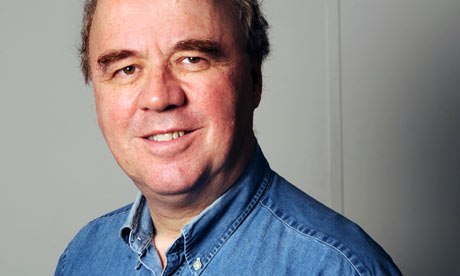
Fr Peter Gumpel SJ

Friday, May 14, 2010

Revisiting the October 2000 International Commission Report on Pius XII

In an earlier entry I referred to the recent conference organised by Pave The Way Organisation in Rome that met to discuss the 47 questions raised by the International Catholic-Jewish Historical Commission.  The ICJHC was formed in 1999, met until October 2000 and was disbanded in 2001.  The report was presented to the world by the ICJHC when further progress with the Vatican was effectively ruled out.  The circumstances of the break-down in communication have been the subject of some controversy made more so by some rather intemperate remarks of Peter Gumpel SJ, the relator of the cause of Pius XII. (See comments below)

The report is available online, and deserves close reading.  The questions asked are valid and well thought out.  A comprehensive list of footnotes follows the text with references to Acts and Documents.

Articles on the Commission's work have generally focused on the perceived reasons for its "failure" rather than the opportunity to explore in detail the issues raised in the questions.  Dimitri Cavalli's article in the New Oxford Review and published in EWTN's archive source is one such example.  Carping on the ability or lack thereof among the scholar's command of Italian becomes churlish when one looks at the academic credentials of each individual.  And the commission was provided with translators.  Although Cavalli leans towards exonerating Pius, he does, at least, recognise the need for more study.

I wrote a final chapter in my PhD on the work of the commission which was not included in A Cross Too Heavy.  At the risk of wearing the reader, I present the unpublished chapter.  The writing was completed in 2003, just over a year before the death of Pope John Paul II.  I crave the reader's indulgence for the use of the present tense when writing of the Pope.

Pacelli’s Ghost
Rome
and the
International Catholic Jewish Historical Commission
1999-2002


In 1998, Pope John Paul II authorised the publication of We Remember: A Reflection on the Shoah.  This document was timed for release shortly before Passover and Easter. It was the first Vatican statement which addressed the Holocaust by name.  The Pope’s intention was to “help to heal the wounds of past misunderstandings and injustices.” (We Remember Introduction) 

No other pope in Catholic history has done as much as John Paul to build bridges between Catholicism and Judaism.  His visit to Auschwitz in 1979 was as much an act of homage to the Jews who died there as it was a commemoration of the Christians who also perished. In 1986, he made a very public visit to the Rome Synagogue; the first pope to ever visit the oldest schule in Western Europe, describing the Jews as the “beloved elder brothers” of Christians.  What drove the Polish-born Pontiff to order We Remember came directly from his own wartime experiences of Nazism and the “Final Solution”.  The document did not resolve the questions surrounding Pius XII.  In fact, the questions appeared to have been made more complex.

The chief points of contention lay in the distinction made between Christian anti-Judaism and antisemitism and the comments on the wartime role of Pius XII. While the document recognised the failure of individual Christians, it did not acknowledge or suggest a failure on the part of the teaching authority of the Church.  “Despite the Christian preaching of love for all, even for one’s enemies, the prevailing mentality down the centuries penalized minorities and those who were in any way ‘different.’” (We Remember  3)  The blame for antisemitism was pushed away from the Magesterium. In fact, the language of this part of the document was dangerously close to echoing the bald and historically insupportable generalised claim made by one of Pacelli’s earlier biographers: “The Church has always come to the defense of the Jews in the past when they were persecuted". (Joseph Dinnen 1939, Pius XII: Pope of Peace, p 196)

Of greater concern was the assertion that followed the distinction made above. Not only were anti-Judaism and antisemitism two different ideologies; the later did not draw from the former. The document stated:


The Shoah was the work of a thoroughly modern neo-pagan regime. Its antisemitism had its roots outside Christianity and, in pursuing its aims, it did not hesitate to oppose the Church and persecute her members also. (We Remember 4)

On this point there has been loud and vigorous argument. It is a statement that does not bear the weight of historical evidence and makes the tenor of the whole document weaker. In fact this statement is what I call a type of “Catholic denialism”, an unwillingness to “own” the truth about the Church’s role during the Holocaust. The historical data proves beyond reasonable doubt that such a distinction is as impossible as it is false. Much of Nazism grew in the fertile soil of traditional Christian antisemitism and anti-Judaism.

Partly out of response to the criticism launched by We Remember, the Vatican announced a new historical commission in late 1999 to re-examine the twelve volumes of Actes et Documents.  Actes et Documents du Saint-Siège relatifs à la Seconde Guerre mondiale came into being as a direct result of Hocchuth’s play The Deputy and the growth of academic and religious unrest over the role of Pius XII during the Holocaust.  Pope Paul VI ordered a team of Vatican appointed scholars to sift through the documents of the Secretariat of State and collate evidence to show that charges of papal inaction were untrue.  The work lasted from 1965 until 1981.  The volumes are an impressive undertaking and do show the Church’s highest officials, among whom was Giovanni Battista Montini – the future Paul VI – active in work to alleviate the plight of many different victim groups.   Curiously, there appeared to be some serious gaps in the records.  This was a point the Commission was to note in 2000.


The International Catholic Jewish Historical Commission (ICJHC) was made up equally of Catholic and Jewish historians.  Catholic members were Eva Fleischner, Gerald Fogarty and John Morley, from the United States.  The Jewish members were Belgian Bernard Suchecky, Israeli Robert Wistrich and Canadian Michael Marrus.  

In October 2000, the commission presented a preliminary report.  The commission raised 47 questions concerning Pius, drawn from a study of Actes et Documents.  Cardinal Walter Kasper, secretary of the Pontifical Commission for Religious Relations with the Jews, commented in June 2001 that the Commission had not achieved what it set out to do, and that a second attempt needed to be made. (Cf Inside the Vatican  June 2001)  Rather than bring an air of academic harmony over Pius, the exact opposite happened.  The questions still remained unanswered. Historians hoped that John Paul would accept the report and allow greater access to the Vatican archives and personal papers of Pius – if they exist.

A lengthy introduction was necessary in order to place the International Commission within its context.  The mandate of ICJHC was limited only to the published Actes et Documents (1965-1981).  When pressed on whether the commission would have access to unpublished material, Cardinal Edward Cassidy, the then president of the Vatican’s Commission for Religious Relations with the Jews, answered “absolutely no.” (Cf The Tablet (London) 30.11.1999)  (This, of itself, was not surprising.  The announcement of the limited opening of the ASV Germany files was not made until February 2003) 


Members of the Commission undertook the reading and researching of the published texts. However, eleven months into their investigation it was clear that the published record was inadequate.  There is evidence to suggest that members of the panel were becoming increasingly frustrated by Vatican intransigence over access to archives.  On 25 October 2000, the Paris daily Le Monde published an article claiming the ICJHC had reached the conclusion that Pius XII did not speak out clearly in defence of the Jews of Europe.  Seeking to avoid a direct “showdown” with Rome, the ICJHC called a press meeting the following day to present its Preliminary Report and the accompanying list of 47 questions drawn from the Actes et Documents.  Both Commission and Vatican officials expressed positive sentiments that the material studied would help shed light on Pacelli’s role.  For the moment, things seemed to be back on course.

Central to the ICJHC’s critique of the published documents was the inadequacy of relying on them alone. In its article on the presentation of the Preliminary Report The Tablet remarked:

Not everyone was happy with the press conference. Jesuit priest Peter Gumpel, the postulator, or official promoter of the beatification, of Pius XII, declared the conduct of the ICJHC as “disloyal to the Holy See, academically unacceptable and incorrect.” (Zenit 27.10.2000) Gumpel went on to ask if the ICJHC was intent on defaming the memory of Pius XII. Emphasising the preliminary nature of the report, Gumpel said it would have to be studied carefully by Vatican historians.  What irked the German-born Jesuit was the release of the report on the internet and to the press. “With what right have they circulated the Preliminary Report, which includes harsh accusations against Pius XII and the Church, without having even heard the answers to the questions posed?” (Zenit, ibid.)
No serious historian’ could accept that the published, edited volumes were the last word on the matter … Absent from these volumes, the report says, are day-to-day records and internal communications – diaries, memoranda, briefing notes, appointment books and minutes of meetings – that would establish how Pius and members of his curia reached their decisions. (Tablet 04.11.2000)

At the end of 2001, the work of the commission remained suspended.  The Vatican adamantly claimed that the work of the ICJHC was sabotaged through slander and an agenda which was more directed at attacking the Catholic Church than searching for the truth.  The members of the commission begged to differ, standing by their July letter that unless that Vatican opened the archives for Pius XII to independent scrutiny, no successful resolution of the questions surrounding Pacelli’s wartime role would be possible. Cardinal Kapser’s continued assertion that access to post-1922 material was impossible because of the “sensitive, sacramental nature of some of the documents” rang hollow. (Catholic World News 24.08; 27.08.2001)
... this initiative which was intended to improve relations between the Catholic Church and the Jewish community, has failed, and this is the direct responsibility of those who, contravening the most elementary academic and human norms, have made themselves culpable of irresponsible behaviour. (Zenit  26.07.2001)


Vatican prevarication only served to foster the sense that there is something to hide, a fear Kapser appeared anxious to avoid.  At the end of August, in a gesture that could be interpreted as conciliatory, the Cardinal announced Rome’s intention of speeding up the classification of some three million pages of war time documentation.  Referring to the breakdown between the ICJHC and the Vatican, Kasper commented that the central issue was not access to documents, but the wording of the final report. This clearly contradicted the formal statement of the commission itself. (Zenit  29.08.2001)

Where does the historian go from here? At present, the only way forward is the continued combing through archival material from a wide range of sources.  Vatican letters, statements, opinions and directives were written and received all over Europe through the Nazi era.  Copies exist in diocesan archives, in the provincial houses of different religious orders and in private collections.  There is sufficient material drawn from diplomatic records, public archive sources and newspapers to allow the historian a fairly comprehensive picture of Pope Pius’ role during the war years.  Susan Zuccotti’s Beneath his Windows, examining the pope’s role during the persecution of Italy’s Jews, is an excellent example of research that works well without Vatican input.

I believe the stumbling block in all of this is the fading world view held by men such as Peter Gumpel.  He sincerely believes that Pius was a good and holy man, worthy of the “honours of the altar”, a statement he expressed to me earlier in 2001.  And he is not alone in thinking this way.  At the same time Fr Gumpel wrote to me, the Vatican was preparing to canonise the controversial founder of Opus Dei, Monsignor José Maria Escriva, a supporter of Francisco Franco. Escriva’s spirituality owed much to the vigorous Catholic, antisemitic fascism of the Generalissimo.


"The world” does not understand what moves the actions of great men such as Pius XII.  While we may not appreciate or understand the reasons behind action or non-action, we must always believe that they acted from the purest of motives, in obedience to their conscience and God.  To question the action or inaction of Pope Pius XII is tantamount to questioning the action of the Church.  The syllogism closes with the logical conclusion – since the pope is Christ’s vicar on earth, he acts as Christ.  And while he may be infallible in matters of faith and morals only, his pattern of life suggests a surety of God’s direction that should not be questioned by those who do not understand and who do not share the Catholic faith as shared in the halls of the Vatican.  The dispute over the commission could have more to do with the preservation of an historical illusion over papal power and prestige than with discovering the truth of Pacelli’s role during the war.

The great disappointment for men like Gumpel is the encroaching daily reality that their worldview is dying.  Most Catholics no longer accept this view of papal authority.  Indeed, most intelligent and critically aware Catholics question the secrecy that surrounds much of the day to day running of the Vatican, and find it increasingly out of step with the modern world.  Only with an open, honest and frank dialogue with all the material available can historians, regardless of faith background, hope to complete the work begun by the ICJHC.  Pope Leo XIII opened the Vatican archives in 1893 with the statement: “The Church has nothing to fear from the truth.” It remains to his successors to put that into practice.


Several days after I completed this segment, the Vatican announced it was opening the Secret Archives relating to Germany up to 1939.  Announcing the Pope’s decision on 15 February 2002, the Vatican Press Office, said that John Paul wanted to open the archives for historians and end “unjust and disagreeable speculations” over the role of his predecessor. (Zenit  15.02.2002)  While public opinion has not generally been a motivator in Vatican policy-making processes, it is, perhaps, significant that consistent criticism from both Catholic and Jewish scholars along with a growing sense of unease among many “ordinary” Christians and Jews, has been instrumental in forcing a change.  Historians are now waiting expectantly for the new material to emerge from the archives.  I doubt very much if a “smoking gun” will be found, but I am convinced that information that will help scholars understand the inner workings of the Vatican during the Holocaust will be found.  For this reason, if for no other, the work of the ICJHC can be judged to have been successful.


Father Gumpel’s next comment is telling for its subtext. “I wonder why they have done this.  Did they wish to influence public opinion against Pius XII and the Church?  This has happened precisely when we Catholics are making all kinds of efforts to improve relations with the Jewish world.”  Suspicions that a Jewish plot lurked near the surface of the ICJHC were all but named by Gumpel in July 2001.  Some, “not all”, Jewish members of the ICJHC “publicly spread the suspicion that the Holy See was trying to conceal documents that, in its judgement, would have been compromising.” (Zenit 02.07.2001)  Gumpel’s evident distrust of the Jewish historians, which pre-date the work of the Commission, appears to point towards a presupposition that they would be prejudiced against Pacelli.  At no point has Gumpel asked whether this is so, or why such a prejudice could be possible.  At the very least, it displays an unwillingness to address the central issue – access to archives and unsorted documents, and the possibility there might be more to learn about the war-time pope.


The newly appointed president of the Vatican’s Commission for Religious Relations with the Jews, Cardinal Walter Kapser, requested a final presentation from the commission on 21 June 2001.  A month later the commission replied that “without a positive response to our respectful request” to study the unpublished material in the archives, the ICJHC’s conclusions would be invalid.  Therefore, on 20 July, the commission suspended its work.  The commission’s letter was later published by the World Jewish Congress and summarised by the BBC. Father Gumpel left no doubt as to where the blame lay for the collapse of the research:
Thursday, April 29, 2010

Pius defenders gathered to answer questions about Pope Pius XII

This is the heading of an article about a gathering Rome.  I have taken it from Catholic News Service.  At this stage I know nothing of the proceedings and cannot make any comment on what was discussed.  I post this article because it is important to attempt to hear all the voices about Pius, even the ones I don't necessarily agree with.  When I learn more about the Rome meeting I will make some considered comments.

I met Andrea Tornielli and Matteo Luigi Napolitano.  Andrea is a delightful and articulate journalist with whom I dicussed a number of issues related to Pius at the Jerusalem symposium in March 2009.  Matteo is likewise very affable and keen to listen to other points of view.  While I do not agree with all their conclusions about Pius, I respect their work as historians. 

I have read Ronald Rychlak's book, "Hitler, the War and the Pope" (2000) and consider it more apologia than history along the lines of other "pro-Pius" writers.   I did not find much that had not been written before and little use of references outside the war years to help understand the mindset of the Vatican.


The article follows:

By Sarah Delaney - Catholic News Service


Wednesday, 28 April 2010


Defenders of Pope Pius XII gathered in Rome to answer a list of questions about his actions in the face of Nazi persecution of Jews in Europe during World War II, an organizer of the event said.

Gary Krupp, founder of the Pave the Way Foundation, a nondenominational organization that seeks to improve interfaith relations, said a panel of five experts on the wartime period met April 26-27. The object of the videotaped meeting was to answer 47 questions about the Catholic Church and World War II that had been posed but never officially answered by a Catholic-Jewish commission disbanded about 10 years ago.

Krupp said the experts enlisted were Jesuit Father Peter Gumpel, a top promoter of the canonization cause of Pope Pius; Ronald J. Rychlak, professor of law and associate dean at the University of Mississippi, and the author of two books on Pope Pius' wartime role; Matteo Luigi Napolitano, an Italian associate history professor at the University of Molise and a Pope Pius biographer; Andrea Tornielli, who covers the Vatican for an Italian daily and a Pope Pius biographer; and Michael Hesemann, a German author of several books about the church, including one defending Pope Pius' wartime record.

Krupp, an American Jew, has maintained that Pope Pius has been unfairly judged by Jewish groups and some historians who say that he did not speak out forcefully to try to stop Adolf Hitler's persecution of Jews. Krupp joins many Catholics who say the pope did all he could behind the scenes to try to save Jewish lives and that a direct confrontation would have provoked worse reprisals against Jews.

Krupp supports Pope Pius' sainthood cause. Pope Benedict XVI recently declared the wartime pope venerable, one of the first steps toward sainthood, a move that angered many Jewish groups who say that Pope Pius' role remains ambiguous and that it should be studied before the cause goes further.

The questions addressed by the panel originated with a joint commission of scholars formed in 1999 by the Vatican and the International Jewish Committee for Interreligious Consultation to study the issue of Pope Pius and the Jews during the war. After examining published materials for a year, the commission suspended its work amid controversy over access to still-closed Vatican archives from that period. I suggest the journalist could have done a better job with her homework and written a little more accurately about the International Catholic Jewish Historical Commission and their work.  The hyper-link takes you to the report on which this Rome meeting appears to be gathered to answer.  The IHCJC story is worth taking the time to read, if only to experience something of the difficulties confronting historians.

Krupp said he would make the nine hours of recorded material available on DVD and on his foundation's website.

He and four other Jewish figures who had been present during the taping of the panel's discussions spoke briefly with Pope Benedict at the end of the weekly papal audience in St. Peter's Square April 28.

They also met with German Cardinal Walter Kasper, president of the Pontifical Council for Promoting Christian Unity, Krupp said. They discussed an interfaith effort to promote a tradition of families eating together on Friday night, he said. They also expressed their fear of a nuclear Iran and Iran's hostile attitude toward Israel, Krupp said.