Showing posts with label Russia. Show all posts

Tuesday, July 7, 2015

ADSS 1.55 Orsenigo to Maglione - news from Berlin


ADSS 1.55 Cesare Orsenigo, Germany, to Luigi Maglione, Sec State

Reference: Report 8 (27,518); AES 4465/39.

Location and date: Berlin, 03.06.1939

Summary statement: Prince Paul of Yugoslavia visits Berlin; German-Polish conflict has not been resolved; German-Russian agreement appears to be fading.

Language: Italian

Text:

I hasten to convey to your Eminence some items of news, certainly not important in themselves, but which double useful in forming an opinion about the situation.

On Friday Prince Paul, Regent of Yugoslavia, arrived in Berlin and was received with all the honours bestowed on similar occasions to other important personalities, as for example, Admiral Horthy, Regent of Hungary (1).

A military review was organised in his honour, and it was a really imposing spectacle, as these events always are here; the Diplomatic Corps was invited, and I also went along.  The Polish and Turkish ambassadors were also present; the Russian ambassador was away form Berlin and was represented by his Counsellor.  A gala performance of Wagner’s masterpiece “The Master Singers” was also given in honour of the Prince Regent of Yugoslavia at the State Opera Theatre; the Diplomatic corps was also present, and the various diplomats were introduced to the Prince Regent; I, as usual, was not present.

From conversations I had with the diplomats I gathered the impression that the fear of a war between German and Poland has not disappeared at all.  Some say that Germany first want to complete its line of defence in the east; in fact gigantic works are being carried out on the Polish frontier; others mention the hope, not yet abandoned, that one should wait for the result of the pending negotiations for an understanding with Russia.  Others, although not very optimistic, hope that the conflict could be postponed at least until next year, which – they say – would be a sign of German weakness, and therefore almost a psychological defeat in the eyes of the German people, full of fanatic conceptions about the military power of their country.

I have not been informed in the strictest confidence, in view of the severity with which breaches of official secrecy are punished, that during my visit to the Chancellor at Berchtesgaden the following immediate instructions were given to the German newspapers:
1. Not to report any news about possible proceedings against priests for immorality.
2. No longer use the front page, but only the second page, for reporting any news regarding the Danzig problem.
The instructions were repeated three times during three weeks after May 5 at the Press conference held at the Propaganda Ministry.

The papers were also instructed not to mention Russian Bolshevism, but three days ago this prohibition was cancelled; which leads the Press to understand that an agreement between Germany and Russia must not be considered improbable.

I enclose the last issue of the magazine Nordland which I must say is not completely respectful to the Catholic church and even less to the so-called Christian Churches.  The Nordland tends to oust all the churches, to substitute for them the notorious atheism of the Deutschenchristen, called also Gottglaubig. (2)

Notes: 
(1) Friday, 02.06.1939. Prince Paul of Yugoslavia (1893-1976), Regent 1934-41.

(2) The Deutschenchristen or Deutsche Christen  (German Christians) were a small group within German Protestantism that sought to reconcile National Socialism and Christianity.  The rejected the Jewish elements of the Bible and the Jewish ancestry of Jesus, adopted Nazi anti-Semitism as compatible with Christian faith, aligned themselves the Fuhrerprinzip and Gleichschaltung with regard to the creation of a Reich church.  After some initial support from Hitler who believed he could use the group to further consolidate power, the German Christians faded to a noisy background group with little influence on either the Nazi Party or the Protestant Churches in Germany.  Orsenigo has not understood the term Gottglaubig (“belief in God”). The term was used for Germans who had left the Christian Church but still retained a faith in a higher power. It was also used as a way of “getting ahead” in Nazi organisations that grew increasingly hostile to institutional Christianity.  It was the most common form of “belief” expressed by men joining the SS.

Sunday, May 10, 2015

ADSS 1.34 Stanislaw Janikowski to Maglione: Polish response to current tensions

 ADSS 1.34 Stanislaw Janikowski, counsellor and charge d’affairs, Polish Embassy to the Holy See (1) to Luigi Maglione, Sec State.

Reference: AES 2600/39.

Location and date: Warsaw 09.05.1939.

Summary statement: The Polish Government’s ideas on the situation at present and Polish policy.

Language: French

Text:

In pursuance of our conversation on the 13th of this month [sic] I am pleased to send your Eminence the enclosed note. I do not need to point out the strictly confidential character of this communication.

PRIVATE AND CONFIDENTIAL

Summary of the conversation between His Excellency the Apostolic Nuncio in Poland and the Foreign Minister which tool place at Warsaw on 9 May 1939. (2)

Extract

Speaking with His Excellency the Nuncio on 9 May and after having pointed out the non-official character of this personal contact I have expressed the opinion that the incomprehensible lack of courage on the part of Italy has created acute difficulties in the present international situation.  I have added, strictly privately that the visit of Ciano in Poland made me feel slightly disappointed. (3) I told His Excellency the Nuncio that having constantly looked after the Italian interests regarding their dealings with Berlin I could not, nevertheless, fail to note a visible fear to be shown by Ciano every time the German problem came up during talks.  That is why these talks could not go beyond the limits of feeling and courtesy.

I have never had the intention to undermine the politics of the Axis, but I believed that as regards the problems of Eastern Europe Italy could have shown a little more of their own political thought.  I expected, even o the part of Ciano, some appreciation, perhaps more marked on this subject.  But I was completely disappointed.

One could perhaps avoid the separation of Europe into two hostile blocs if Italy had [sic] shown more decision in the affairs of Eastern Europe in this case she would certainly have had Poland as a partner.

I have consequently underlined the fact that the “last bridges have not yet been burnt” and this thanks to our attitude with regard to the Anglo-Russian discussions.  This attitude has provoked a limitation of British engagements with regard to Russia and it is the Polish policy, which has made it possible not to draw Russia into the game.

I have requested His Excellency the Nuncio to inform the Holy Father confidentially that during the course of talks in London I expressed myself as follows: The Anglo-Polish drawing together is only a measure of prevention against the war, whereas the promise of Russia already plainly signifies a war policy. (4) I believe that in order to choose the latter there is still plenty of time.

Notes:
(1) Stanislaw Janikowski (1891-1965), Counsellor and Charge d’affairs, Polish Embassy to the Holy See 1937-39. 
(2) Filippo Cortesi (1876-1947) Nuncio to Poland 1936-47; Jozef Beck (1894-1944) Polish Foreign Minister 1932-39.
(3) Galeazzo Ciano (1904-1944) Italian Foreign Minister 1936-43, visited Poland between 26.02 and 01.03.1939.  Ciano visit was welcomed by many as a hoped for sign of Italian support for Poland.  They were to be bitterly disappointed as Beck points out.
(4) On 31.03.1939 Prime Minister Neville Chamberlain made a public declaration that Britain would support Poland in the event of attack.


Saturday, October 1, 2011

ADSS 8.301 Burzio to Maglione: SS killing Jews in Russia

It would appear that once news began to flow on the increasing brutality shown towards the Jews in German-occupied Russia (which should be read as Belarus and Ukraine more so than Russia itself) the trickle became a flood.  Although this document is pithy, it describes in sufficient detail the standard Einsatzgruppen process of concentrating Jews and then shooting them to death.  Burzio's report to Rome means that the Vatican was in possession of evidence of the German policy of mass murder of Jews by no later than the spring of 1942.

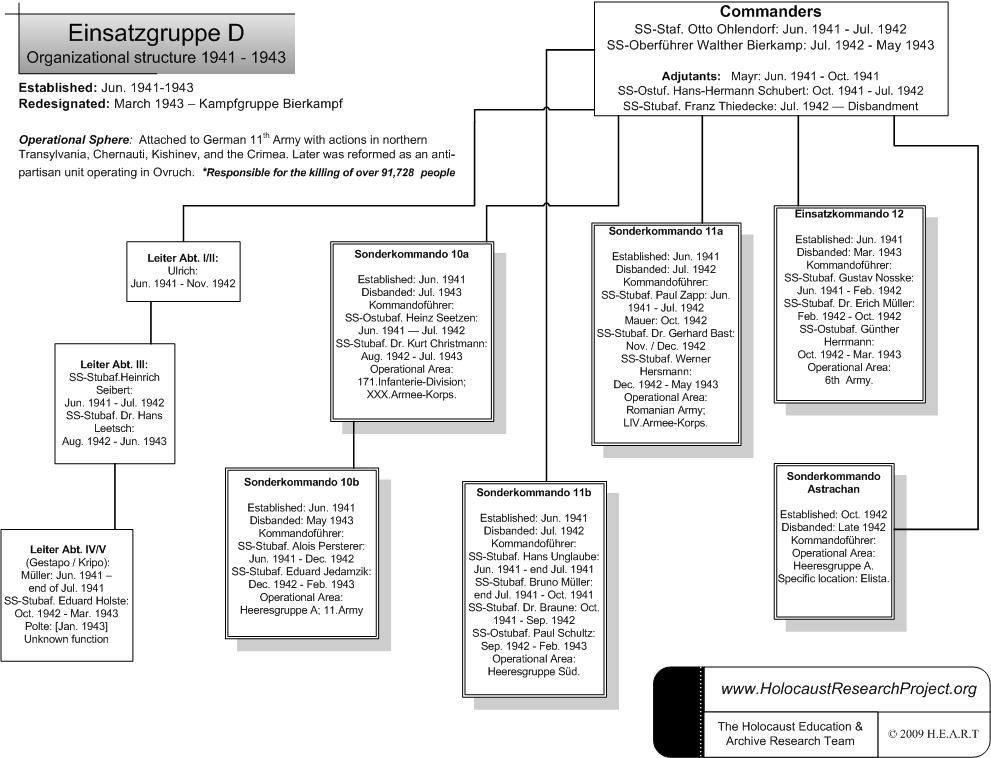
Slovak troops fought as part of the Axis coalition in the Soviet Union, mostly in the Ukraine.  The killing of Jews was not hidden, so it would be highly likely that some Slovakians witnessed the shootings, and, perhaps, some participated.  Einsatsgruppe D, under SS-Gruppenführer Otto Ohlendorf, was the main killing unit in Ukraine.


ADSS 8.301

Reference: Rap nr 812 (AES 3368/42 orig)
Location and date: Pressburg (Bratislava), 11.03.1942
Summary statement: News of massacres of Jews in Russia committed by German SS.
Language: Italian
Text:

With regard to the question contained in the latter part of the dispatch Number 9610/41 of 20 December 1941, I have the honour to communicate to Your Eminence that the Slovak authorities are by no means unfamiliar with the atrocities committed against Jews in occupied Russia. (1)

According to information provided by the Slovak military chaplain [Michael Buzalka], the massacres were committed by units of the militia “SS”, by order of the German government authorities. All the Jews of a given place were concentrated away from the town and murdered with machine guns.

Cross references:

(1) Cf ADSS 8.184, note 3.